
Lightning does strike twice (and thrice, and a million times)
Discover the real rules of thunderstorm safety, the truth about repeat hits, and the mythical phenomena shooting electricity into space.
Welcome back to Fighting Assumptions, the newsletter where we take the idioms, adages, and “common sense” rules we blindly accept and put them under the microscope.
Today, we are tackling a phrase you’ve probably used to comfort a friend: “Lightning never strikes twice in the same place.”
We use it to reassure people. Survived a freak round of corporate layoffs? Don’t worry, lightning never strikes twice. Dealt with a bizarre plumbing disaster? Relax, lightning never strikes twice. It is a linguistic pat on the back, implying that the universe operates on a strict quota system for bad luck. Once you’ve paid your dues to statistical improbability, you are safe.
It is a lovely sentiment. But as a scientific rule of thumb? It is dangerously, objectively wrong. In fact, lightning loves to strike twice. And three times. And sometimes a hundred times.
It’s time to retire this assumption.
The science of the strike
To understand why the idiom fails, we have to look at what lightning actually is. At its core, lightning is a massive, lazy discharge of static electricity. It does not have a memory, it does not keep a ledger of its past victims, and it certainly doesn’t avoid a spot just because it has already been hit.
When a negatively charged stepped leader reaches down from a storm cloud, it is desperately searching for the quickest, most efficient path to positively charged ground. It will naturally favor targets that are:
Tall: They drastically shorten the distance the electrical charge has to travel through the insulating air.
Isolated: A lone tree in an open field gathers more concentrated ground charge than a tree surrounded by a forest.
Conductive: Metal structures, bodies of water, and moisture-rich environments offer a path of least resistance.
If a specific location possessed these traits yesterday, it will possess them today. The laws of physics don’t change just because an area already took a hit.
The real-world repeat offenders
If you need proof that lightning is a repeat offender, look no further than the skylines of our major cities.
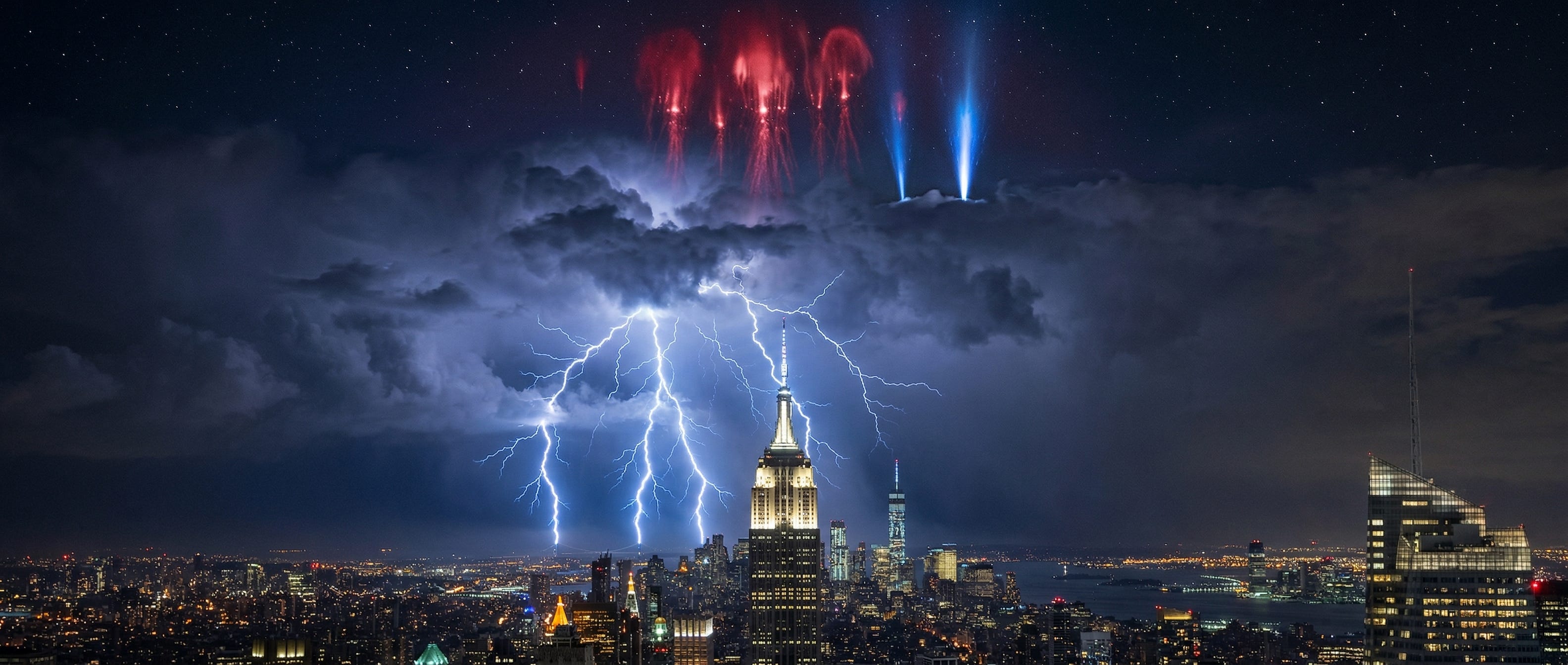
The Empire State building: This iconic New York skyscraper doesn’t just get struck twice; it gets struck anywhere from 25 to 100 times every single year. During a particularly severe storm, it can absorb multiple direct hits in the span of just a few minutes.
The catatumbo phenomenon: Over Lake Maracaibo in Venezuela, the atmospheric conditions are so perfect for thunderstorms that lightning occurs up to 300 nights a year. The exact same geographic area is struck by lightning millions of times annually.
Roy Sullivan: Perhaps the most famous victim of this myth is Roy Sullivan, a former US park ranger. He currently holds the Guinness World Record for surviving the most lightning strikes. Between 1942 and 1977, Sullivan was struck on seven separate occasions; proving that sometimes, lightning strikes the exact same person repeatedly.
The upward spark (yes, “space lightning” is real)
While we are breaking assumptions about lightning, let’s shatter the biggest one of all: that lightning only strikes down. As it turns out, while bolts are hammering the ground below, massive electrical discharges can simultaneously shoot upward from the tops of thunderclouds, reaching into the stratosphere and toward the edge of space.
Scientists call these Transient Luminous Events (TLEs), but they are better known by their mythological nicknames.
Red Sprites are colossal, jellyfish-like bursts of crimson light that can span 30 miles across. Blue Jets shoot up like glowing blue cones from the cloud tops, and Elves are massive, rapidly expanding halos of red light that flash in a fraction of a millisecond.
For decades, commercial pilots reported seeing these ghostly flashes high above storms, but they were largely dismissed as optical illusions. It wasn’t until 1989, when a researcher accidentally caught a Sprite on a low-light video camera, that science finally confirmed this upward-striking phenomenon was real.
The verdict
“Lightning never strikes twice” is a great metaphor for the unlikelihood of winning the lottery twice, but it is an abysmal survival strategy during a thunderstorm.
The next time a severe storm rolls in, don’t assume a previously struck tree or building is safe. Lightning is fundamentally lazy; if a target was the easiest path to the ground once, it will gladly use it again.
Stay curious, stay grounded, and as always, keep fighting your assumptions.
Sources & further reading:
National Weather Service (NWS) / NOAA: The Myth of Lightning Striking Twice. The NWS actively campaigns against this idiom in their lightning safety materials, confirming that tall objects are struck repeatedly. (weather.gov/safety/lightning)
NASA Earth Observatory: Sprites, Elves, and Blue Jets. NASA provides extensive documentation and satellite imagery of Transient Luminous Events, explaining the physics of upward-striking atmospheric phenomena. (earthobservatory.nasa.gov)
Guinness World Records: Most lightning strikes survived. The official record of Roy C. Sullivan, the Virginia park ranger who survived seven verified strikes between 1942 and 1977. (guinnessworldrecords.com)
American Meteorological Society (AMS): Thunderstorm Electrification and Lightning. Comprehensive scientific overviews of how stepped leaders and return strokes find the path of least resistance.